Self-observation is the foundational practical discipline of the Gnostic path. It is the capacity to watch one's own psychological states clearly, honestly, and without immediate identification or reaction, as they actually arise in present experience. Without this capacity, the deeper work of comprehension and psychological dissolution cannot proceed, because one cannot work with what one has not first clearly seen. Self-observation is therefore not merely one practice among others but the essential preparation for all other aspects of the inner work. Everything else depends on it, and everything else becomes more effective as it deepens.
What Self-Observation Is and Is Not
Self-observation must be distinguished carefully from ordinary introspection and self-analysis. Ordinary self-analysis is typically conducted after the fact: we reflect on a conversation that has already ended, review a reaction that has already run its course, or plan how we might behave differently in a future situation. This retrospective analysis may have some value, but it is not the same as self-observation in the Gnostic sense.
Genuine self-observation is a present-moment activity. It is the direct, immediate awareness of a psychological state as it is actually occurring: the quality of an emotion as it arises, the physical sensations that accompany it, the particular thought patterns that triggered or sustain it. This kind of observation requires a specific quality of inner attention that is different from ordinary thinking about oneself. It is closer to the attentiveness of a skilled naturalist watching an animal in its habitat: precise, non-intrusive, and genuinely curious.
It is also essential to distinguish self-observation from self-criticism or self-judgement. The practice requires a quality of honest, curious, and impartial witnessing. To observe anger arising is not the same as judging oneself for being angry. The observer simply notices, records, and remains present without evaluating or condemning what is seen. This quality of non-judgemental witnessing is itself deeply transformative, independently of any subsequent work on what has been observed.
"Remember yourself always and everywhere."
G.I. Gurdjieff
The Three Brains: A Gnostic Map of the Inner Life
Gnostic psychology offers a practical map that greatly assists the practice of self-observation. The human being has three distinct centres or "brains," each of which processes experience in its own way and generates its own characteristic states. The intellectual brain thinks and reasons. The emotional brain feels and intuits. The motor-instinctive-sexual brain governs bodily movement, instinct, physical sensation, and the vital creative energy.
In the ordinary psychological state, these three centres function without genuine coordination and without conscious oversight. The intellectual brain analyses situations that require an emotional response. The emotional brain reacts to intellectual judgements. The motor brain acts before either of the others has had time to process what is happening. This lack of internal coordination is one of the primary causes of the inconsistency and contradictoriness that Gurdjieff observed and described as the multiplicity of "I"s.
Self-observation, when applied with awareness of these three centres, becomes far more precise and effective. Rather than simply noting that "I was angry," the observer can notice which centre the state originated in, how it spread to the others, what its physical signature was, and what thoughts accompanied or followed the emotional event. This level of precision is not academic; it is practically necessary for the comprehension that makes genuine dissolution possible.
"To observe oneself without judging is the beginning of intelligence."
J. Krishnamurti
The Division of Attention
The technical key to self-observation is the division of attention. In the ordinary psychological state, attention flows entirely outward or is entirely absorbed in inner activity. We are completely identified with whatever is happening, whether external or internal, with no remainder of attention available for neutral witnessing.
Self-observation requires cultivating the capacity to divide this attention: to maintain genuine engagement with the situation at hand while simultaneously keeping a portion of the attention turned inward and witnessing the psychological states that arise. This divided attention is not a matter of distraction or inattentiveness to outer events; it is a deepening of presence through the addition of an inner witnessing dimension that most people experience only rarely and accidentally.
P.D. Ouspensky, drawing on the teachings he received from Gurdjieff, described this capacity as "self-remembering": the state in which the practitioner is simultaneously aware of the outer environment and of their own inner psychological condition. Most people experience this state only rarely. It can be cultivated through consistent, patient practice, and even small advances in this capacity produce significant and observable improvements in the quality of daily inner life.
In the beginning, the capacity for divided attention is brief and unstable. It appears for a moment and then collapses back into complete identification with whatever is happening. This is entirely normal and should not be cause for discouragement. The work of self-observation is, among other things, the progressive extension of the duration of this divided state and the gradual stabilisation of it under increasingly demanding conditions. A student who can maintain it for five seconds in a moment of genuine emotional activation has made a real and measurable advance. The very act of noticing that it has collapsed, and of returning attention inward without self-criticism, is itself an exercise of the witnessing capacity that is being developed.
Non-Identification: The Essential Companion Practice
Closely related to self-observation is the practice of non-identification. In the ordinary state, we not only experience inner states but become entirely absorbed in them. When anger is present, we are not merely aware of anger; we are angry, meaning the entire field of awareness is occupied by and fused with the angry state. When anxiety is present, we are anxious in the same total, absorbed sense. The psychological state dictates both the interpretation of events and the response to them.
Non-identification means maintaining a degree of inner separation between the witnessing awareness and the observed psychological state. The state is felt fully and honestly, but the awareness that observes it retains its perspective and is not entirely swallowed by what it is watching. In practical terms, this means being able to note inwardly: "I am observing an anxious state arising," rather than simply being anxiety without any witnessing perspective available.
Even a small degree of this inner separation changes the entire relationship to the psychological state. The state loses its absolute authority over behaviour and response. Space appears in which a more conscious choice becomes possible. This space, however small it seems at first, is the beginning of genuine inner freedom, and its cultivation through consistent practice is one of the most reliable indicators of real progress in the inner work.
How to Begin the Practice
The most effective way to begin self-observation is to select a single, frequently occurring psychological state as the initial object of practice. This might be a habitual irritability that arises in a particular kind of situation, a familiar anxiety that appears at certain times of day, or a recurring pattern of vanity or self-deprecation. The choice of a specific, recognisable pattern is more effective than attempting to observe the entire field of inner life at once, which is too broad for the beginning practitioner to hold.
When the selected state appears, the practice is simply to notice it as clearly and precisely as possible: the physical sensations in the body, the quality and intensity of the feeling, the thoughts that accompany it, and any impulse to act that arises. This noticing is done without any immediate attempt to change, suppress, or analyse what is observed. For the purpose of this initial practice, the observation itself is the complete act.
Students often discover, with some genuine surprise, that the simple act of clear observation changes the inner landscape significantly. When a psychological state is clearly seen and acknowledged without identification, it does not necessarily vanish immediately, but it loses a degree of its compulsive authority. This discovery is itself an important confirmation that the practice is real and that it works, and it usually provides the motivation needed to continue and deepen the work.
A practical support for establishing this rhythm is to link the practice to three or four existing daily habits: the first cup of tea in the morning, the commute to work, the midday meal, the minutes before sleep. At each of these anchoring points, the practitioner pauses briefly and asks honestly: what inner state am I in right now? What am I feeling? What is the quality of attention I have been bringing to the past hour? These brief, regular returns to inner awareness train the habit of self-observation into the fabric of daily life more reliably than sporadic intensive sessions.
"A path of a thousand miles begins with a single step."
Lao Tzu, Tao Te Ching 64
Self-Observation Within the Community
One of the most valuable aspects of attending the weekly Gnostic classes is that the community setting provides both instruction in self-observation and immediate opportunity to practise it. The quality of attention brought to listening, to discussion, and to the relationship with other students in the room is itself a field of self-observation that group practice makes unusually vivid and revealing.
New students often find that the atmosphere of a sincere group focused on genuine inner work has a quality of presence that supports the inner work more effectively than isolated effort. Experienced students often find that the presence of newer students provides occasions to notice habitual patterns of judgement, comparison, and subtle self-assertion that solitary practice does not so readily reveal. The community, in this respect, is not merely a support for the inner work but is itself one of its most demanding and rewarding arenas.
Weekly classes in Hobart, Hobart Eastern Shore, and Launceston provide this kind of working environment for students at every stage. The consistent return to a community that takes the inner work seriously renews and deepens the individual practice in ways that cannot easily be replicated in isolation.
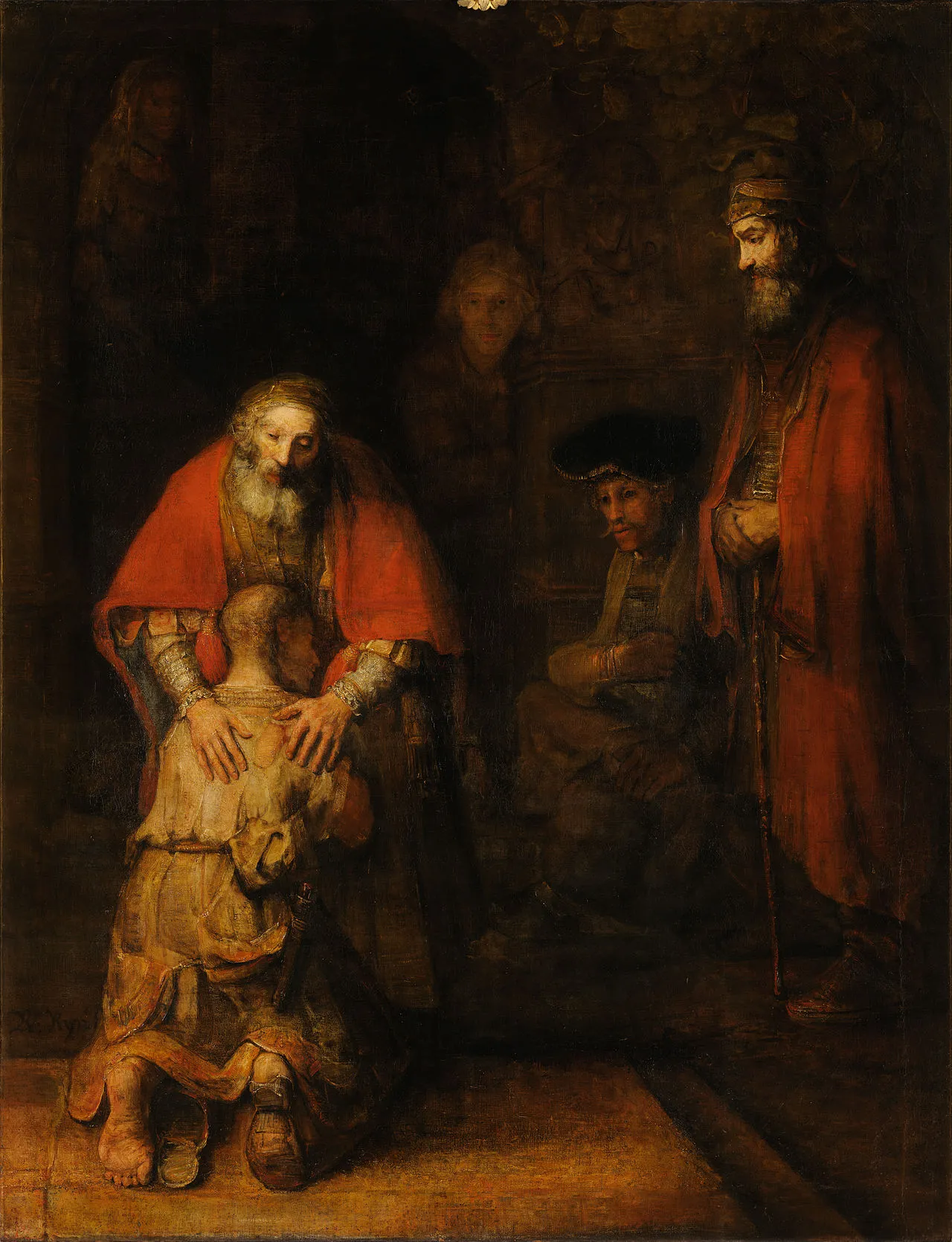
Image credit: Public domain / Wikimedia Commons. Rembrandt van Rijn, A Scholar in His Study (1634), Sternberg Palace, Prague.