A common misunderstanding about spiritual practice is that it belongs to a special, protected category of activity, separate from the rest of life and conducted only in designated times and places. Genuine inner work is not an activity among other activities but a quality of consciousness that can and should permeate everything. The office, the family home, the supermarket, the daily commute, and the conversations that make up the fabric of an ordinary Australian day are not interruptions to the inner work. They are the inner work, and in many respects they are the most demanding and revealing arena in which it can be practised.
Ordinary Life as the Primary Field of Practice
The situations that generate the strongest psychological reactions are precisely the most valuable for inner work, because it is in those moments that the ego-patterns most clearly reveal themselves. The difficult colleague, the frustrating bureaucratic interaction, the misunderstanding in a close relationship: each of these is an opportunity to apply the practices of self-observation and non-identification that the weekly class teaches in theory. Without these practical applications, the inner work remains theoretical; with them, it becomes a genuine and progressive transformation of the way one lives.
This perspective transforms the entire experience of daily life. Rather than feeling divided between a "spiritual life" that happens in meditation rooms and a "real life" that happens everywhere else, the practitioner begins to see every situation as a potential moment of inner work. The content of experience changes relatively little; the quality of attention brought to that content changes profoundly, and this change in the quality of attention is the essential work.
Gurdjieff expressed this directly from within a tradition that shares the same understanding: "Work on yourself while you work on everything else. Every moment is an opportunity for the real work." This is not a counsel of constant effort or strained self-monitoring but an invitation to bring genuine awareness to what is already happening, in the places and with the people that are already present.
"Work on yourself while you work on everything else. Every moment is an opportunity for the real work."
G.I. Gurdjieff
The Practice of Present-Moment Awareness
At the core of daily Gnostic practice is "being in the here and now": a quality of present-moment awareness that is neither pulled into memory and regret about the past nor projected into anticipation and anxiety about the future. This quality of presence is not merely a pleasant mental state; it is the natural condition of the awakened consciousness, and cultivating it in ordinary daily life is one of the most direct routes of genuine inner development available to anyone.
In the Australian context, the natural environment offers particularly rich support for this practice. A few minutes of genuine, unhurried attention at the ocean, in the bush, or in the mountains, where the present moment is vivid and immediate and the mind's ordinary internal noise is temporarily set aside, develops the same quality of presence that is needed in more challenging human situations. The capacity for genuine presence cultivated in natural settings carries over naturally into the daily texture of human interaction.
One practical exercise is to select a specific ordinary daily activity as the designated field of full attention for an entire week: walking between rooms, washing dishes, making and drinking tea. During that activity, the entire attention is brought to the actual sensory experience of what is happening: the physical sensations, the sounds, the quality of light, the movements of the hands. When the mind wanders into memory or anticipation, the attention is returned, without frustration, to the present sensory reality of the activity. The exercise sounds simple and is. What makes it effective is consistent, patient application over time rather than sporadic bursts of good intention.
This quality of present-moment awareness, once it begins to develop, is not confined to designated practice activities. It begins to extend naturally into unexpected moments of daily life, arising spontaneously in circumstances that previously received only habitual, mechanical attention. This is not a manufactured effect but the natural beginning of consciousness awakening to the ordinary richness of what has always been present.
"Knowing others is intelligence; knowing yourself is true wisdom. Mastering others is strength; mastering yourself is true power."
Lao Tzu, Tao Te Ching 33
Relationships as Mirrors of the Inner Life
Close human relationships are among the most powerful and revealing fields of inner work available to the ordinary person. The psychological patterns that remain largely invisible in solitude become unmistakeable in the presence of others. The projections we make, the reactions that arise, the defences that activate in intimate or challenging relationships: all of these reflect the ego-structures that the inner work is progressively attempting to dissolve.
Understanding this does not mean treating relationships instrumentally, as mere occasions for psychological observation. It means bringing to relationships the same quality of honest, non-identified awareness that genuine inner work asks of every aspect of experience. Genuine relationships, approached with this quality of consciousness, deepen in ways that are genuinely enriching to all involved, because honest presence and sincere care are among the most valuable gifts one person can offer another.
Close relationships also provide a particularly valuable kind of feedback: the direct response of another conscious being to who we actually are, as distinct from who we believe ourselves to be. The ego maintains an elaborate picture of itself, carefully managed and selectively curated. The people we live closely with, who observe us in unguarded moments and across the full range of daily experience, often see aspects of our actual psychological functioning that we cannot see in ourselves. When this feedback is received honestly and with genuine willingness to look, it is among the most valuable contributions a relationship makes to the inner work.
This requires a quality of relationship that is not always easy to find or sustain: one in which both parties are genuinely committed to honesty, mutual care, and the kind of respect that makes real feedback possible without becoming an instrument of harm. This kind of mutually developmental relationship is one of the highest expressions of the third factor of conscious awakening, the sacrifice for humanity that begins with the people most immediately and concretely present in one's own daily life.
Building a Consistent Daily Practice
For those beginning to integrate the inner work into daily life, a few consistent and simple practices will produce more genuine results over time than occasional intensive efforts separated by long periods of inattention. The inner work responds to consistency and sincerity more than to intensity and drama.
The value of any of these practices lies entirely in the quality of attention brought to them. A mechanical routine, carried out by habit without genuine inner engagement, produces little of lasting value. Five minutes of genuine and honest self-observation will produce more real development than an hour of mechanical ritual. The aim is always to bring real consciousness to what is happening, however briefly and imperfectly, and to return to that aim as many times as necessary each day.
- Five minutes of genuine silence before the day begins, before screens and external demands start
- Selecting one recurring psychological pattern as the specific object of observation for an entire week
- Pausing at least three times daily to ask honestly: what inner state am I in right now?
- Retrospective meditation for ten to fifteen minutes in the final moments before sleep
- Bringing full, unhurried attention to one ordinary daily activity each day, whether eating, walking, or making tea
- Brief prayer to the inner Being at the beginning of the day, stating one's genuine intention for the day's inner work
Sustaining the Work Through Community
One of the most consistent discoveries of students who attempt to practise solely in isolation is that the inner work is significantly more sustainable, and significantly more revealing, when it is shared within a genuine community of fellow students. The weekly Gnostic class provides this: a regular time and place dedicated to inner work, the mutual support of others who understand the challenges and discoveries that arise, and the particular quality of collective attention that a sincere group generates.
In Tasmania, the Gnostic centres of Hobart, Hobart Eastern Shore, and Launceston all offer this kind of community to students at every stage of the work. New students find the community welcoming and practically useful. More experienced students find that teaching and supporting others deepens and clarifies their own understanding in ways that solitary study cannot produce. The community and the solitary practice support one another, and both are more effective for the existence of the other.
There is also something that community provides that no private practice can replicate: the experience of being genuinely known by others who are engaged in the same work with the same sincerity. This quality of honest mutual recognition, between students who are not performing a social role but genuinely attempting to awaken, creates an atmosphere of trust that supports the kind of honesty with oneself that the inner work most fundamentally requires. If you are in Tasmania and feel drawn to this kind of sustained, community-supported practice, the centres in Hobart, Hobart Eastern Shore, and Launceston welcome sincere inquiries.
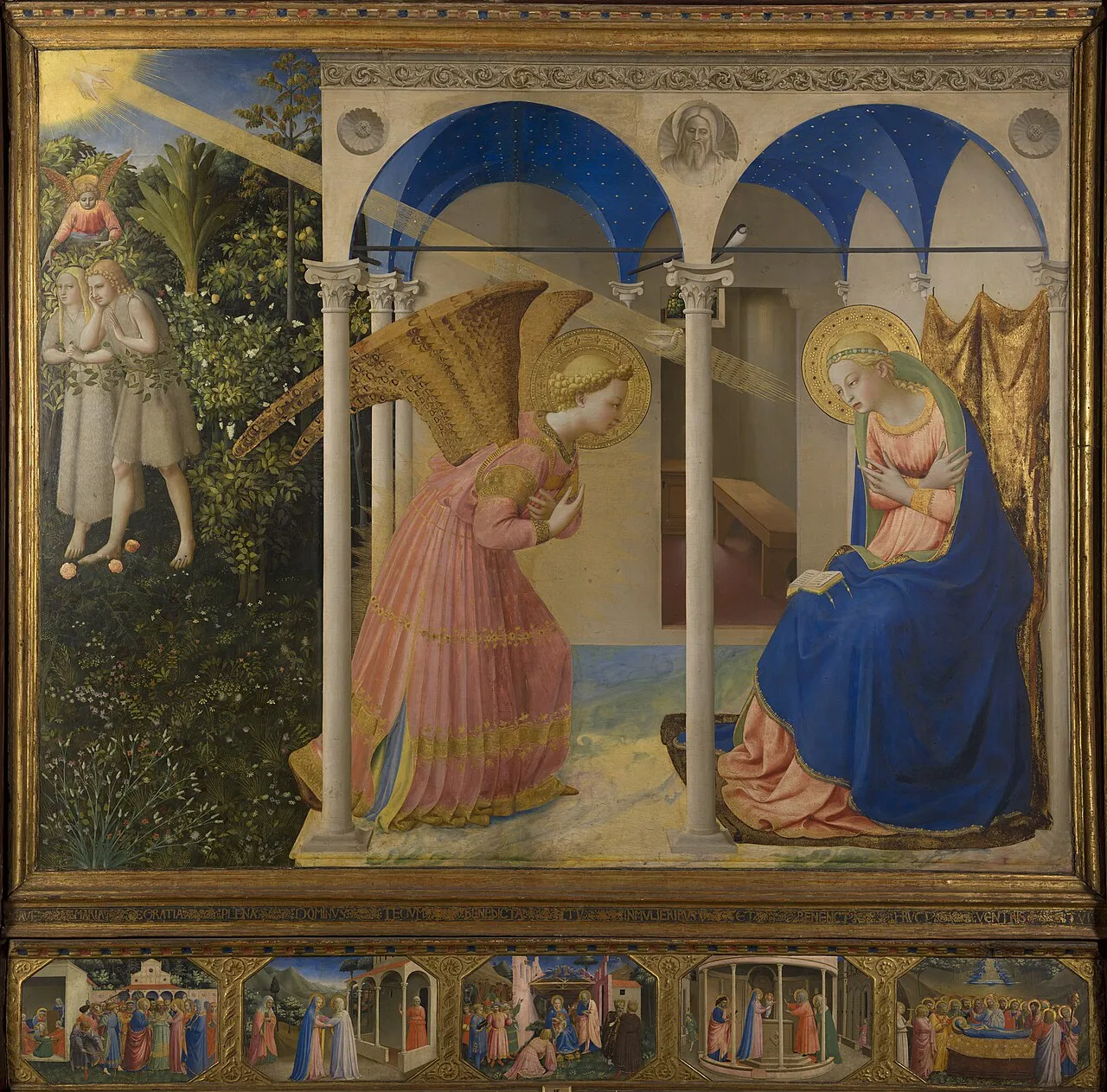
Image credit: Public domain / Wikimedia Commons. Jean-François Millet, The Angelus (1857-59), Musée d'Orsay, Paris.